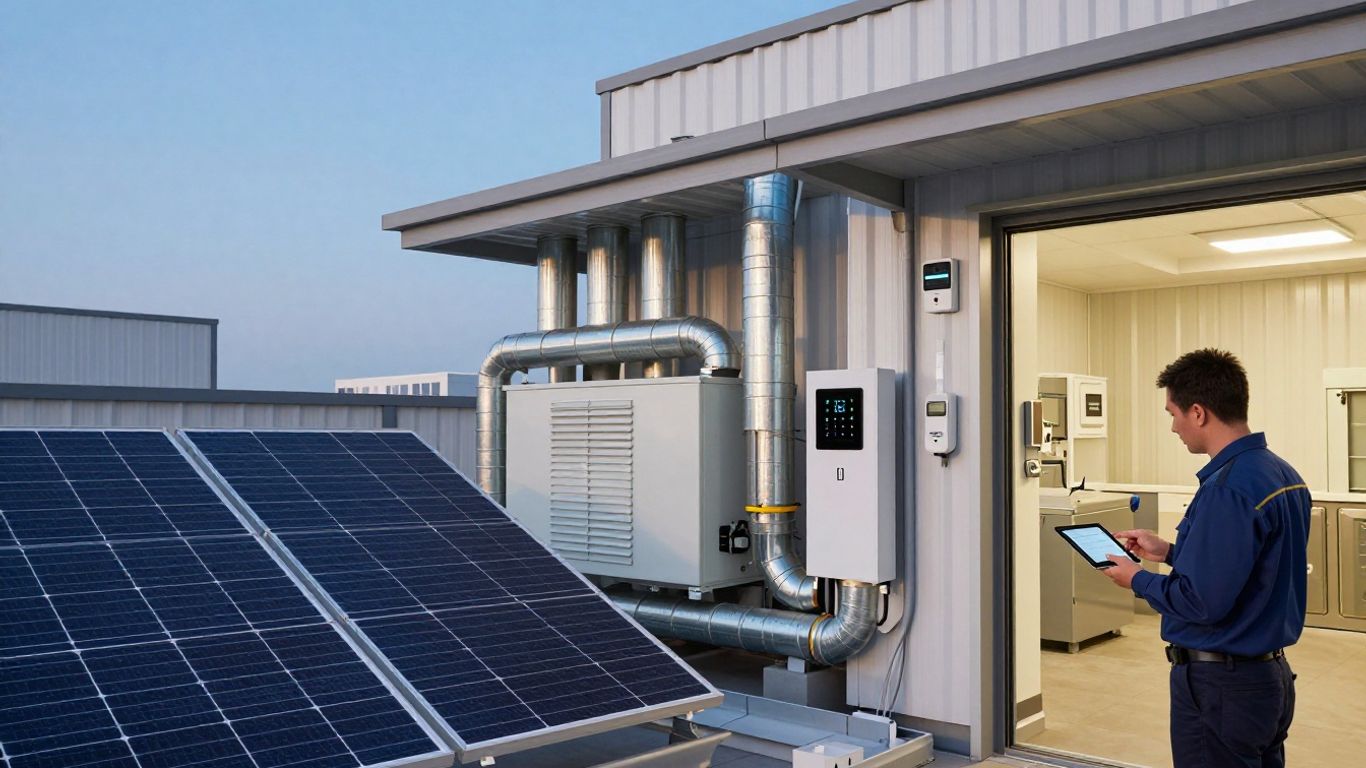
What building energy management means
Building energy management is the organised process of measuring, understanding and improving how a building uses energy. We look at equipment, schedules, occupancy and operating conditions together rather than treating each electricity bill as an isolated result. The aim is not simply to use less energy, but to keep the building comfortable, reliable and fit for purpose while avoiding waste.
The role of energy management in modern buildings
Energy management gives building teams a repeatable way to connect day-to-day operations with longer-term performance goals. A building may consume unnecessary energy because equipment runs outside occupied hours, heating and cooling work against each other, or faults go unnoticed. Without useful data, these problems can remain hidden behind normal seasonal changes.
We therefore treat energy as an operational matter, not just a purchasing cost. Good building energy management helps us ask practical questions: what is using energy, when does that use occur, and what change would improve the result without creating discomfort or risk? Those questions can guide maintenance, refurbishment and operating decisions alike.
How a building energy management system works
A building energy management system, or BEMS, brings together information from meters, sensors, controllers and connected building services. It can collect readings, organise them over time and present patterns that help us investigate unusual consumption. Depending on the installation, it may also support control changes through connected automation systems.
The process generally follows a loop. We measure current conditions, compare them with a baseline or expected pattern, investigate a difference, make a controlled adjustment and then check whether the result lasted. That final check matters: a short-term reduction is less useful if it causes complaints, equipment stress or a rebound in consumption.
The difference between BEMS, BAS, and EMS
The terms BEMS, BAS and EMS are related, but they are not always used in exactly the same way. A building automation system, or BAS, is usually concerned with monitoring and controlling building services such as heating, ventilation, air conditioning and lighting. An energy management system, or EMS, places greater emphasis on energy data, performance and improvement.
A BEMS commonly combines those ideas for a building or portfolio. The boundaries depend on the system design and the organisation using it, so we should examine the actual functions rather than rely on the label alone. A platform that displays energy data but cannot connect to operational workflows may be less useful than one that supports investigation and action.
Buildings and facilities that benefit most
Most occupied buildings can benefit from a clearer view of energy use, although the opportunities differ by facility. Large or complex sites often have more equipment, more operating schedules and more energy data to coordinate. Smaller buildings can also gain value when a simple monitoring arrangement reveals avoidable after-hours use or recurring faults.
The strongest candidates tend to have meaningful energy loads, variable occupancy or several systems that interact. Offices, education facilities, health and community buildings, retail sites, warehouses and mixed-use properties may all use the same principles. We begin with the building’s actual operating needs rather than assuming that a larger system is always the better choice.
The core components of a building energy management system
A useful system is more than a dashboard placed on top of a meter. It depends on a chain that starts with accurate measurements and ends with an informed operational response. If any link is weak, the system may produce attractive charts without helping us change performance.
We assess the hardware, communication pathways, software and human routines together. The right combination depends on the building’s age, existing automation, energy profile and available staff time. A modest system that people trust and use can be more valuable than a technically advanced installation that receives little attention.
Sensors, meters, and connected devices
Meters tell us how much energy is being consumed, while sensors provide context such as temperature, humidity, occupancy or light levels. Submetering can help separate major loads, although it should be planned around decisions we expect to make. Measuring everything is not automatically useful if the data cannot be interpreted or acted upon.
Connected devices may send readings at regular intervals to a central platform. We check their location, calibration, communications and maintenance requirements, because a missing or implausible reading can distort the story. A well-designed measurement plan identifies which loads matter most and how often their behaviour needs to be observed.
Building automation and control systems
Automation systems translate operating rules into actions. They may manage setpoints, start and stop times, ventilation rates or lighting schedules, subject to the building’s controls and safety requirements. Their value depends on sensible configuration and ongoing review; automatic control is not the same as optimised control.
We also consider how a proposed energy strategy will interact with existing equipment. A change that saves electricity but causes unstable temperatures or excessive cycling may not be a good operational decision. Controls should be tested carefully, with clear fallback arrangements and records of what was changed.
Energy monitoring and analytics software
Monitoring software turns separate readings into trends, comparisons and investigations. It can help us compare similar periods, identify unusual changes and follow the effect of an intervention. Analytics are most useful when they shorten the path from a signal to a practical question for the facilities team.
We prefer analysis that explains why a result deserves attention. For example, a persistent overnight load, a sudden change in a plant room or a difference between similar zones may warrant inspection. Software does not replace engineering judgement, but it can direct that judgement towards the places most likely to matter.
Dashboards, alerts, and reporting tools
Dashboards make the current picture easier to share, while alerts bring attention to conditions that may otherwise be missed. Reports can support maintenance reviews, operational meetings and sustainability updates. Each view should have a purpose and a defined audience rather than presenting every available data point at once.
A practical reporting rhythm might include a short operational review and a deeper monthly assessment. The following items are often useful to include in that routine:
- Total energy use compared with a suitable baseline
- Unusual after-hours or weekend consumption
- Major equipment alarms and unresolved faults
- Changes in comfort complaints or indoor conditions
These measures help connect energy performance with the work already being done by building teams. We can then refine alerts, remove noisy notifications and focus attention on issues that have a realistic path to resolution.
How building energy management reduces energy use
Energy savings usually come from a series of operational improvements rather than one dramatic intervention. We identify where energy is being wasted, decide what can change safely and verify the result over time. The process is especially effective when it combines controls, maintenance and informed behaviour.
The best opportunities are not always the most visible ones. A large piece of equipment may be operating reasonably well while a smaller load runs continuously, or a control sequence may create waste across an entire building. Measurement helps us rank opportunities instead of relying on assumptions.
Identifying waste and inefficient equipment
Energy data can reveal loads that do not match the building’s use. We might see consumption continuing during vacant periods, a base load that is higher than expected or a sudden increase that coincides with a fault. These signals do not prove the cause, but they give us a useful starting point for inspection.
We then combine the data with site knowledge. Maintenance records, operator observations and equipment age can explain why a pattern is occurring. A leaking valve, blocked filter, failed sensor or poorly configured timer may each have a different remedy, even if the initial energy trace looks similar.
Optimizing heating, ventilation, and air conditioning
Heating, ventilation and air conditioning often require careful attention because they affect both energy use and occupant comfort. We review schedules, setpoints, outside-air requirements, zone behaviour and equipment sequencing. The aim is to provide the required conditions without running plant harder or longer than necessary.
Small control changes should be assessed in context. Reducing a setpoint or shortening a schedule may help in one area but create discomfort in another if occupancy or weather differs. We make changes gradually, monitor the response and retain a clear record so that successful settings can be repeated.
Managing lighting and plug loads
Lighting controls can address unnecessary operation through schedules, occupancy sensing, daylight response or clearer local control. Plug loads deserve similar attention, particularly where computers, displays, kitchen equipment or specialist devices remain energised outside normal use. We first confirm the operational need before changing a schedule.
The most effective approach is usually practical rather than punitive. Clear shutdown routines, sensible defaults and visible feedback can support technical controls. We also check whether a control change creates a new problem, such as disabling equipment that needs to remain available or reducing lighting below an appropriate level.
Using demand response and load shifting
Demand response and load shifting involve changing when energy is consumed, rather than focusing only on the total amount. Some flexible loads can be moved away from periods of high demand, provided the change does not compromise safety, comfort or essential operations. This may involve adjusting charging, storage, conditioning or other scheduled activities.
We treat flexibility as a site-specific resource. Before shifting a load, we document its limits, identify who approves the change and define how the system will return to normal operation. The resulting plan should be tested under realistic conditions, because a theoretical opportunity may not be practical during a busy or unusual operating period.
How to implement building energy management
Implementation works best as a managed improvement programme rather than a one-off technology purchase. We begin by understanding the building, its data and its people. From there, we choose a realistic first phase and create a way to learn from each change.
A staged approach can reduce disruption and make the business case clearer. It also gives operators time to build confidence with new tools. The system should support existing responsibilities, not create a second disconnected process that nobody has time to maintain.
Establishing an energy baseline
An energy baseline describes how the building performed during a defined period under known conditions. We gather available bills, meter readings, operating schedules, occupancy information and relevant weather or production context. The baseline must be clear enough that future performance can be compared fairly.
We avoid treating one unusual month as a normal reference point. Vacancies, maintenance shutdowns, extreme weather and changes in operating hours can all affect consumption. Where the data is incomplete, we document the limitation and improve the baseline as better information becomes available.
Setting goals and selecting performance indicators
Goals should describe the improvement we want and the conditions that must be protected. Energy use is one measure, but we may also track operating cost, peak demand, equipment runtime, comfort complaints or maintenance response. Selecting too many indicators can make the programme difficult to manage.
We agree on definitions before reporting begins. For example, the team should know whether a result is based on whole-building consumption, a particular end use or a normalised comparison. Clear measures build trust because people can see how a conclusion was reached and what action it supports.
Auditing equipment, systems, and operating schedules
An audit connects the data with the physical building. We inspect major plant, control panels, meters, sensors, distribution equipment and occupied spaces. We also compare programmed schedules with the hours the building is actually used, since the two often drift apart.
Interviews with operators can be just as valuable as a site walk. Staff may know about recurring alarms, temporary overrides or equipment that behaves differently in practice than it appears in documentation. We record these observations alongside technical findings so that the implementation plan reflects real operating conditions.
Creating a phased implementation plan
A phased plan sets out what will be measured, changed, tested and reviewed first. Early work might focus on data quality and obvious scheduling issues, followed by control improvements, submetering or more advanced analytics. The sequence should reflect available resources and the risks associated with each intervention.
We assign owners, decision points and review dates for every phase. This keeps the programme moving while allowing us to stop, revise or expand an approach based on evidence. A good plan is specific enough to guide action but flexible enough to accommodate what the building teaches us.
Technologies that improve building energy performance
Technology can make energy management more visible and responsive, but it is not a substitute for sound operating practice. We select tools according to the questions we need to answer and the actions we can realistically take. Interoperability, maintainability and data quality deserve as much attention as features.
New technology should fit into an architecture that people understand. A sensor that cannot be maintained, a platform that cannot exchange data or an algorithm that generates unreviewed alerts may add complexity without improving results. We assess the full life cycle, including installation, commissioning and ongoing support.
Smart meters and real-time monitoring
Smart meters can provide more frequent information than periodic manual readings, helping us see how consumption changes during the day. Real-time or near-real-time monitoring may reveal start-up peaks, persistent base loads and the effect of a control adjustment. The appropriate interval depends on the load and the decision we are trying to make.
We validate readings before drawing conclusions. Meter multipliers, time settings, communication gaps and unusual sensor behaviour can all produce misleading patterns. A simple data validation routine protects the credibility of the monitoring programme and prevents wasted investigation.
AI-driven analytics and predictive maintenance
AI-driven analytics can examine large volumes of operational data and identify patterns that deserve attention. Predictive maintenance approaches may use changes in equipment behaviour as an indication that inspection is worthwhile. These tools are most helpful when they provide an understandable reason for an alert and a practical next step.
We still need engineering review. A model may confuse a temporary operating change with a fault, or it may miss a problem because the relevant sensor is unreliable. We use analytics to prioritise investigation, then confirm the finding through site evidence and maintenance knowledge.
Internet of Things devices and wireless controls
Internet of Things devices can add measurement or control points without the same cabling approach used in a traditional installation. Wireless controls may be useful in spaces where layouts change or where extending wired infrastructure would be disruptive. Their suitability depends on coverage, battery life, environmental conditions and maintenance access.
We plan device management from the start. Every connected device needs an owner, a location record and a replacement or update process. Wireless convenience is valuable only when the system remains dependable after the initial installation team has left.
Renewable energy and battery storage integration
On-site renewable generation and battery storage change the way a building’s energy flows are managed. Monitoring must distinguish energy imported from the grid, energy generated on site and energy stored or discharged. Controls can then coordinate available resources with building demand and operating priorities.
Integration requires careful attention to system boundaries and operating rules. We document what happens during outages, abnormal conditions and communication failures, and we confirm that the resulting strategy supports the building’s essential functions. Energy performance improves when these technologies are managed as part of the wider site rather than as isolated assets.
How to measure results and improve performance
Measurement turns a building energy programme into an ongoing management cycle. We compare results with a suitable baseline, investigate deviations and decide whether an intervention should be retained, adjusted or reversed. This prevents early enthusiasm from being mistaken for lasting performance.
Results also need to be interpreted alongside the building’s purpose. A reduction in energy use is not automatically a success if it comes with poor comfort, unreliable equipment or unacceptable indoor conditions. We therefore track operational outcomes as well as consumption.
Tracking energy savings and operational costs
We track energy at the level needed for the decision being made. Whole-building readings can show broad progress, while end-use or equipment data can help explain the result. Where costs are included, we separate changes in consumption from changes in tariffs or other purchasing conditions.
Savings calculations should state their assumptions and comparison period. We also look for persistence: did the improvement remain after the original project team moved on, and did staff continue to operate the system as intended? Regular reviews help us correct drift before it becomes normal practice.
Measuring carbon emissions and sustainability gains
Energy data can support emissions reporting when we apply the relevant emissions factors and document the method. We distinguish between reduced energy consumption, changes in energy source and changes caused by external factors. This creates a clearer account of what the building itself has improved.
Sustainability gains may also include better visibility of resource use, more efficient operation and readiness for future projects. We avoid presenting a single metric as the whole story. A transparent method makes it easier for building owners, operators and occupants to understand what has changed.
Evaluating occupant comfort and indoor air quality
Comfort and indoor air quality belong in the performance review because they are central to the building’s purpose. We consider temperature, humidity, ventilation indicators, complaints and the timing of reported issues where suitable data is available. Averages can hide local problems, so zone-level context may be important.
We investigate trade-offs rather than assuming that every complaint is an energy problem. A comfort issue might result from a sensor location, air distribution, scheduling conflict or equipment fault. By bringing occupant feedback into the review, we can pursue efficiency without losing sight of the people using the space.
Addressing data quality, cybersecurity, and system integration
Data quality should be reviewed continuously. We check for missing values, duplicate points, implausible readings, clock mismatches and changes in meter configuration. These checks are ordinary engineering work, but they protect every conclusion that follows from the data.
Cybersecurity and integration also require clear ownership. Connected systems should use appropriate access controls, documented interfaces and sensible change management. We keep an inventory of devices and connections, limit unnecessary access and plan how the system will behave if communications fail.
The result is a more resilient programme: one that can identify uncertainty, maintain safe operation and improve over time. When measurement, controls and people’s working practices align, building energy management becomes part of normal facility management rather than a separate project.
Conclusion
Building energy management gives us a practical framework for understanding how a building uses energy and improving it without losing sight of comfort, reliability or daily operations. We can begin with trustworthy measurements, clear goals and a focused audit, then introduce controls and technologies in phases. By reviewing both energy results and building outcomes, we create improvements that are easier to maintain and easier to explain.
Frequently Asked Questions
What is building energy management?
Building energy management is the process of measuring, analysing and improving energy use in a building. It combines operational practices, equipment controls and performance review to reduce waste while supporting the building’s intended use.
What is a building energy management system?
A building energy management system collects information from meters, sensors and connected building services. It helps teams view trends, investigate unusual consumption and, where supported by the installation, make informed control changes.
Is a BEMS the same as a BAS?
Not necessarily. A BAS generally focuses on automating and controlling building services, while a BEMS places stronger emphasis on energy measurement, analysis and improvement. Some systems combine both functions, so the actual capabilities matter more than the label.
Which buildings benefit from energy management?
Buildings of many sizes and types can benefit. The most useful opportunities often occur where there are significant energy loads, variable occupancy, complex equipment or operating schedules that do not match actual use.
How do we start an energy management programme?
Start by gathering available bills, meter readings, schedules and equipment information. Establish a baseline, identify data gaps, inspect major systems and choose a small number of practical improvements that can be measured and reviewed.
Can energy management affect occupant comfort?
It can, which is why comfort and indoor air quality should be monitored alongside energy use. Changes should be tested carefully, with attention to local conditions, occupant feedback and the performance of heating, ventilation and air conditioning systems.
How often should building energy performance be reviewed?
The review frequency depends on the building and the data available. Operational teams may check alerts and unusual consumption frequently, while broader performance reviews can take place on a regular monthly or seasonal cycle.